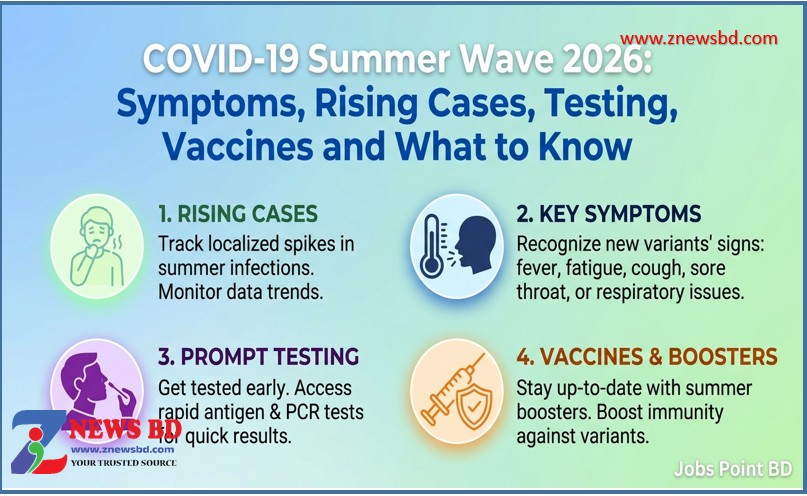
COVID-19 Summer Wave 2026: Symptoms, Rising Cases, Testing, Vaccines and What to Know
SEO Title: COVID-19 Summer Wave 2026: Symptoms, Cases, Tests and Vaccine Updates
Meta Description: COVID-19 cases are rising again in summer 2026. Learn about common COVID symptoms, testing, vaccines, transmission trends and when to seek medical care.
Focus Keyword: COVID-19 summer wave 2026
Secondary Keywords:
COVID symptoms 2026, COVID cases rising, summer COVID surge, COVID-19 symptoms, COVID test, COVID vaccine 2026, coronavirus cases, COVID variants 2026
COVID-19 Cases Are Rising Again in Summer 2026
COVID-19 is showing signs of another summer increase in the United States, with health experts watching a gradual rise in infections and other indicators of viral activity.
CNN reported on August 20 that COVID-19 positivity was beginning to increase, although overall levels remained relatively low. The pattern is particularly notable because recent years have also seen COVID activity increase during the summer months rather than following only a traditional winter pattern.
Recent data cited by health reporters also indicate that COVID infections are growing or likely growing across all 50 states. Wastewater monitoring has shown a significant increase in SARS-CoV-2 levels during August compared with July.
Why Is COVID Rising During Summer?
COVID-19 does not follow the same seasonal pattern as influenza. Although winter can bring substantial respiratory-virus activity, COVID transmission can increase during warmer months as well.
Experts have observed summer waves in recent years. According to CNN’s August 20 report, the current increase appears to be particularly noticeable in southern states, with activity also emerging in parts of the West.
Several factors can contribute to increased transmission, including indoor gatherings, travel, changing immunity after previous infection or vaccination, and the continued evolution of the virus.
What Are the Common COVID Symptoms in 2026?
COVID symptoms can vary considerably from person to person. Current symptoms may resemble a cold, influenza or another respiratory infection.
Common symptoms can include:
- Fever or chills
- Cough
- Sore throat
- Runny or stuffy nose
- Congestion
- Fatigue
- Headache
- Muscle or body aches
- Shortness of breath
- Loss or change of taste or smell
Because symptoms overlap with other respiratory illnesses, symptoms alone cannot reliably tell you whether you have COVID-19.
Should You Take a COVID Test?
If you develop symptoms after a possible exposure, testing can help determine whether COVID-19 may be responsible.
Testing can be particularly useful before visiting people who have a higher risk of severe illness, especially when you have respiratory symptoms.
A negative test does not always rule out an infection, particularly when testing is performed very early. Follow the instructions included with the specific test and consider repeat testing when appropriate.
COVID-19 Vaccines in 2026
COVID-19 vaccine recommendations and availability can change as new vaccines and variants emerge.
Recent reporting indicates that an updated vaccine designed to address the XFG variant is expected around early fall 2026, although timing can depend on regulatory approval and distribution.
Whether you should receive an updated COVID-19 vaccine depends on factors such as your age, health history, previous vaccination, previous infection and current public-health recommendations.
People who are older, immunocompromised, pregnant or otherwise at increased risk of complications should discuss COVID-19 vaccination with a qualified healthcare professional.
Where Are COVID Cases Rising?
Current U.S. surveillance indicates that COVID activity is increasing across the country, although the level of transmission is not identical everywhere.
 Read more ›10 Signs of Mental Health: A Deeper Perspective on Wellbeing10 Signs of Mental Health: A Deeper Perspective on Wellbeing When we talk about…
 Read more ›Breast Cancer Symptoms, Awareness & Treatment: A Complete GuideBreast Cancer Symptoms, Awareness & Treatment: A Complete Guide Breast cancer is one of…
 Read more ›The infection causes burning and pain in the penisThe infection causes burning and pain in the penis, making the affected person uncomfortable.…
 Read more ›Why Paracetamol is effective for muscle pain,How to store Paracetamol correctlyWhy Paracetamol is effective for muscle pain,How to store Paracetamol correctly Paracetamol (Acetaminophen) 1.…
CNN reported that the summer increase has been especially noticeable in southern states, with parts of Texas through Florida showing more pronounced emergency-department activity.
Wastewater surveillance and other monitoring systems can provide an early indication that transmission is increasing, even when reported case numbers do not capture every infection.
How Can You Reduce Your Risk?
You can take several practical steps to reduce your chance of spreading or catching respiratory viruses:
- Stay home when you are sick whenever possible.
- Avoid close contact with people who are especially vulnerable to severe illness.
- Improve ventilation when gathering indoors.
- Consider wearing a well-fitting mask in crowded or high-risk settings.
- Wash your hands regularly.
- Test when appropriate after symptoms or exposure.
- Keep your COVID vaccination up to date according to current medical guidance.
CNN’s recent report also highlighted staying home when sick, avoiding vulnerable people while infectious, hand hygiene and masking as practical measures.
Who Is at Higher Risk of Severe COVID-19?
Although COVID-19 is no longer in the same emergency phase as the early pandemic years, infection can still cause serious illness.
People at higher risk can include:
- Older adults
- People with weakened immune systems
- People with certain underlying medical conditions
- Pregnant people
- Very young children
If you belong to a higher-risk group, speak with your healthcare professional about prevention, testing and treatment options.
When Should You Seek Medical Care?
Most COVID infections do not require emergency treatment, but some symptoms can indicate a serious problem.
Seek urgent medical attention if you experience severe difficulty breathing, persistent chest pain or pressure, new confusion, inability to stay awake, or other severe or rapidly worsening symptoms.
If you are concerned about your symptoms or have a medical condition that increases your risk, contact a healthcare professional.
Is COVID-19 Still a Concern in 2026?
Yes. COVID-19 has become a more manageable respiratory illness for many people, but it has not disappeared.
The current summer 2026 increase shows why people should continue paying attention to local transmission, symptoms and updated health guidance. Experts expect transmission to increase further into late summer, with some projections pointing toward a peak around early September.
The situation can change quickly, so readers should rely on current guidance from public-health authorities and their healthcare professionals rather than older COVID recommendations.
Frequently Asked Questions
Is COVID rising in summer 2026?
Yes. Recent U.S. surveillance and reporting show COVID-19 activity increasing during summer 2026. CNN reported that positivity was beginning to rise, while infections were reported as growing or likely growing nationwide.
What are the main COVID symptoms in 2026?
Common symptoms include fever, chills, cough, sore throat, congestion, fatigue and shortness of breath. Symptoms can vary, and they may look similar to other respiratory infections.
Should I get a COVID test if I have a cold?
If you have symptoms that could be COVID-19, testing can help determine whether you are infected. This can be especially important before contact with people at higher risk of severe illness.
Is there a new COVID vaccine coming in 2026?
An updated COVID-19 vaccine targeting the XFG variant is expected around early fall 2026, although availability and timing can depend on regulatory approval and distribution.
When could the 2026 summer COVID wave peak?
Some experts cited in recent reporting expect transmission to peak around early September, although the timing can vary by location and future viral activity.
Final Takeaway
The summer 2026 COVID-19 wave is a reminder that coronavirus transmission can increase outside the traditional winter respiratory-virus season. Cases and other indicators are rising in the United States, with particularly noticeable activity in parts of the South and West.
If you develop respiratory symptoms, consider testing, limit contact with vulnerable people while sick and follow current medical guidance. People at higher risk of severe disease should speak with their healthcare provider about vaccination and treatment options.
Health disclaimer: This article is for general informational purposes only and is not a substitute for professional medical advice, diagnosis or treatment. COVID-19 guidance can change as new evidence becomes available. Always consult a qualified healthcare professional for advice specific to your situation.
 Read more ›Excessive sexual desire is also a diseaseExcessive sexual desire is also a disease, is excessive sexual intercourse a disease, is…
 Read more ›What to do for pain in hands and feet after fever, treatment for body pain after feverWhat to do for pain in hands and feet after fever, treatment for body…
 Read more ›10 Signs of Good Mental Health Everyone Should Know10 Signs of Good Mental Health Everyone Should Know When we talk about physical…
 Read more ›Why is Mental Health Important?Why Mental Health Matters: The Ultimate Guide to Wellness Imagine building a magnificent, expensive…